

Surah Ar-Rahman — The Divine Symphony of Mercy & Gratitude
An in-depth, heartfelt exploration of the 55th chapter of the Holy Quran: its unique structure, the 31 refrains, prophetic virtues, and practical blessings in daily Muslim life.
1 Surah Ar-Rahman Overview: Chapter, Verses & Structure
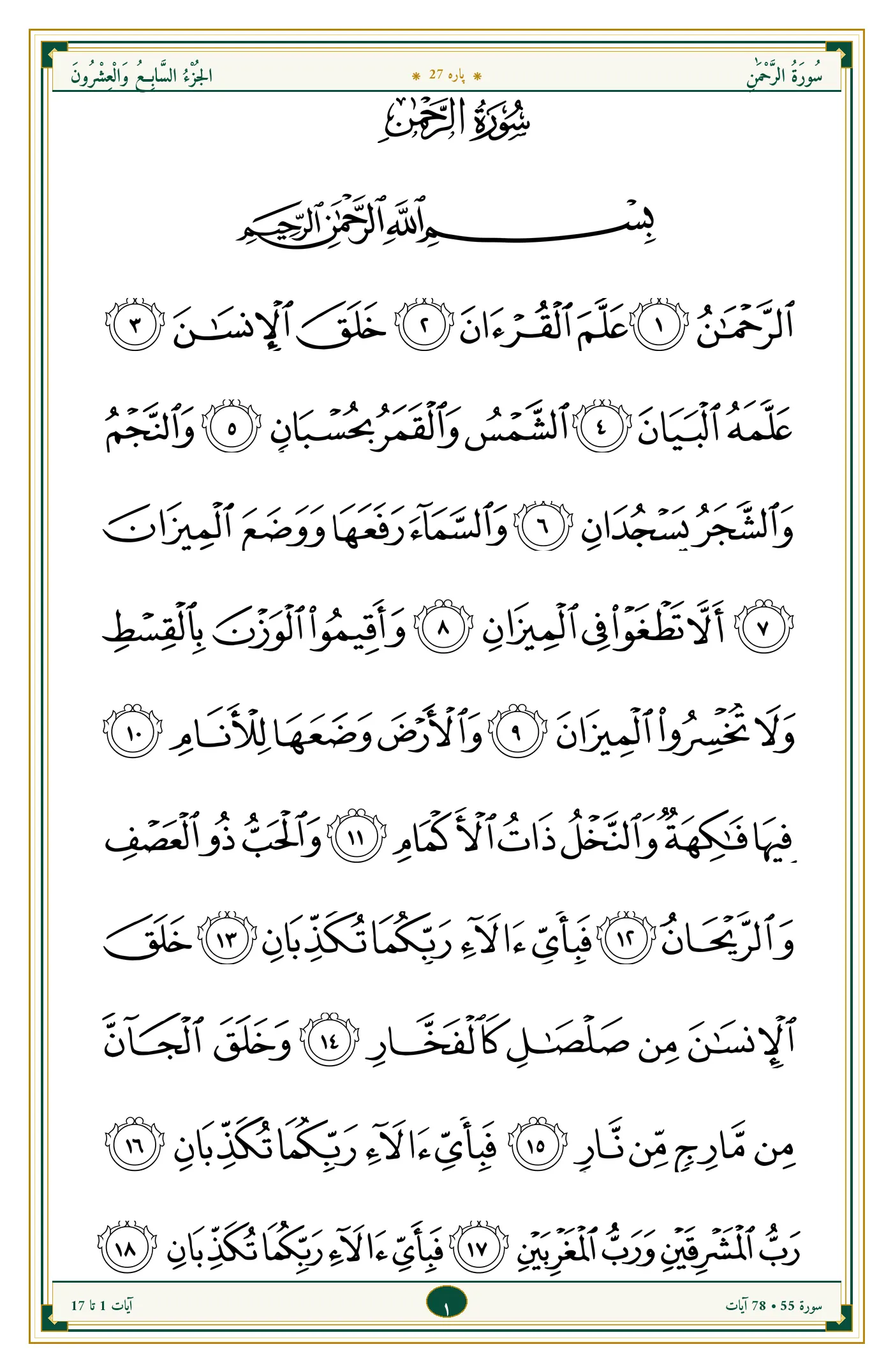
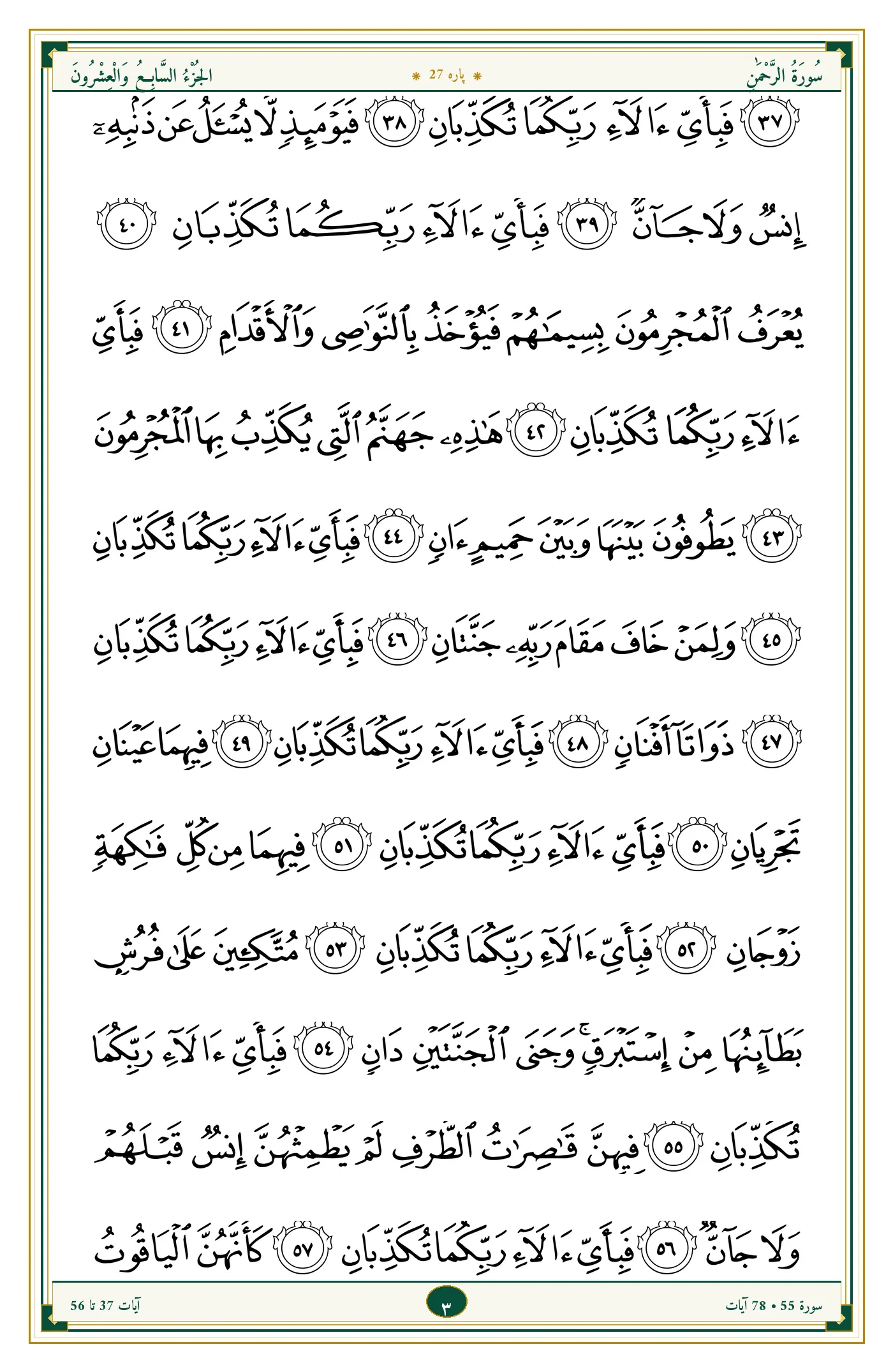
Surah Ar-Rahman (سُورَةُ الرَّحْمَٰنِ) holds a cherished place in the hearts of Muslims worldwide. Positioned as the 55th chapter in the 27th Juz (Para 27) of the Holy Quran, it consists of 78 verses arranged across 3 Rukus.
Unlike many other surahs that open with an oath, a historical event, or an address to the believers, this chapter opens uniquely with a single divine name as its very first verse: « الرَّحْمَٰنُ » (The Most Merciful). In doing so, Allah Almighty establishes mercy not as a secondary quality, but as the foundational pillar upon which all creation rests. It immediately reminds us that it is He who taught the Quran, fashioned mankind from clay, and bestowed upon human beings articulate speech (Al-Bayan).
2 Why is Surah Rahman Called "Arus al-Quran" (The Bride of the Quran)?
Classical scholars and hadith commentators have long treasured Surah Ar-Rahman for its poetic grace and breathtaking symmetry. In an authentic tradition recorded by Imam al-Bayhaqi in Shu'ab al-Iman, our beloved Prophet Muhammad ﷺ is reported to have said:
« لِكُلِّ شَيْءٍ عَرُوسٌ، وَعَرُوسُ الْقُرْآنِ الرَّحْمٰنُ »
"Everything has a bride, and the bride of the Quran is Surah Ar-Rahman."
A bride in Islamic tradition symbolizes unmatched beauty, elegance, honor, and adorned perfection. Surah Ar-Rahman earns this noble title because every single passage is adorned with vivid descriptions of Allah's cosmic handiwork — from the measured orbits of the sun and moon to the underwater pearls, the lush date palms, and the eternal pavilions of Paradise (Jannah). Reciting it feels like walking through an ornate, breathtaking garden of divine gifts.
3 The Profound Meaning Behind the 31-Times Repeated Refrain
The defining signature of Surah Ar-Rahman is its rhythmic, recurring question:
"So which of the favors of your Lord would you deny?"
This question is repeated exactly 31 times throughout the chapter. Notice the dual grammatical form used in Rabbikuma ("your Lord") and Tukadhdhiban ("you two deny"). Allah is not addressing human beings alone; He is speaking collectively to both mankind and the Jinn (Al-Thaqalayn) — the two creations endowed with free will and intellect.
The Symmetrical Division of the 31 Refrains:
- 1 8 Occurrences in Cosmic Creation: Highlighting the balance of the universe, oceans, pearls, earth, and the creation of man and jinn.
- 2 7 Occurrences in Accountability & Judgment: Warning of the Day when the heavens will tear like molten lead and the gates of retribution open.
- 3 8 Occurrences in the Higher Gardens of Paradise: Describing the twin gardens of shade, flowing springs, and ripe fruit for the righteous.
- 4 8 Occurrences in the Lush Additional Gardens: Portraying the dark-green paradise pavilions, carpets, and serene resting places.
According to a famous hadith in Jami` at-Tirmidhi (3291), when the Prophet ﷺ recited Surah Ar-Rahman to his companions, they listened quietly in awe. The Prophet ﷺ remarked: "The Jinn were better in their response than you! Whenever I recited 'So which of the favors of your Lord would you deny?', they responded: 'None of Your favors, our Lord, do we deny; all praise is Yours!'"
4 Spiritual Shifa, Peace of Heart & Emotional Remedy
In our fast-paced, demanding modern lives, many believers experience chronic anxiety, mental exhaustion, and feelings of inadequacy. When you sit quietly with Surah Ar-Rahman — whether reading its verses slowly or listening to a serene recitation — a tangible wave of calm descends upon the soul.
Why does Surah Rahman possess such potent emotional healing? Because human anxiety is often rooted in ingratitude and fear of the unknown. By systematically reminding you of the thousands of unseen blessings surrounding you every second — the air you breathe, the balance of nature, your heartbeat, and Allah's promised forgiveness — the surah shifts your mindset from scarcity to profound abundance (Shukr).
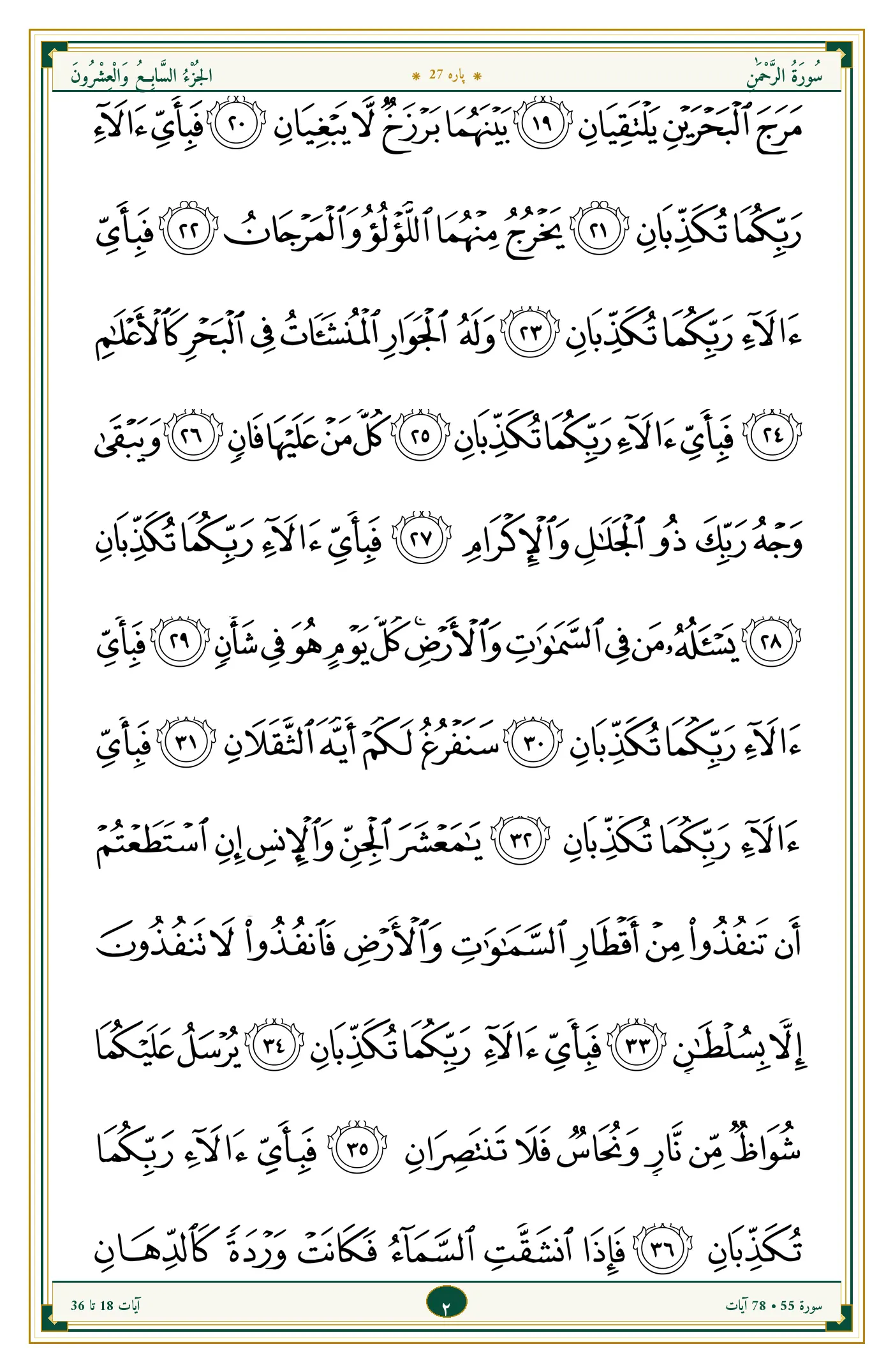
Verses 26–27 remind us of the transient reality of all earthly hardship:
« كُلُّ مَنْ عَلَيْهَا فَانٍ وَيَبْقَىٰ وَجْهُ رَبِّكَ ذُو الْجَلَالِ وَالْإِكْرَامِ »
"Everyone upon the earth will perish, and there will remain the Face of your Lord, Owner of Majesty and Honor." (Ayat 26-27)
This verse brings tremendous solace: every pain, sickness, financial trial, and grief in this world is temporary, but the loving presence of your Lord is eternal.
5 Best Times & Practical Habits for Reciting Surah Rahman
While the Holy Quran can be recited with great reward at any hour of the day or night, traditional Muslim practice and scholarly recommendations highlight several deeply impactful times for Surah Ar-Rahman:
After Fajr Prayer
Starting your morning with Surah Rahman fills the day with barakah, instills conscious gratitude before work, and protects the mind from negativity.
After Maghrib or Before Sleep
Reciting or listening before bed unwinds mental clutter, brings peaceful sleep, and allows you to close your day thanking Allah for its blessings.
During Illness or Trials
Believers frequently recite Surah Rahman over sick loved ones or during difficult circumstances to ask Allah for His special mercy, ease, and complete Shifa.